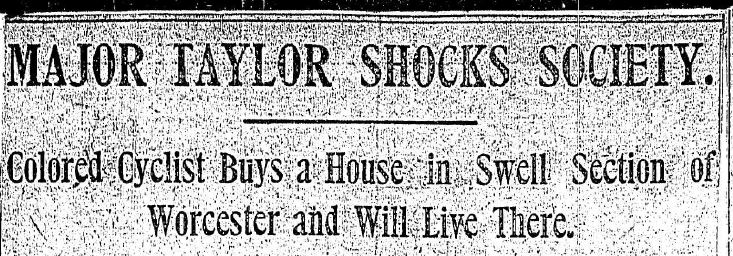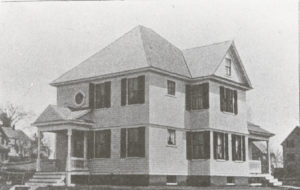
Originally numbered 2 Hobson Ave., this house belonged to Major Taylor. (La Vie au Grand Air, May 4, 1901)
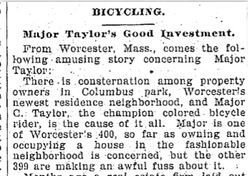
When the world-famous athlete Major Taylor bought a house in an upscale neighborhood in Worcester in January 1900, white neighbors were alarmed. They offered to buy the house from him for $2,000 more than the $2,850 he had paid. Major Taylor refused, and the Columbus Park residents eventually grew to accept their distinguished African American neighbor.
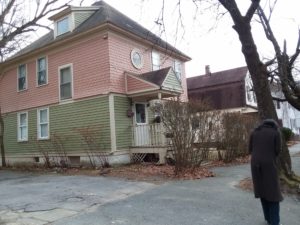
The house, now 4 Hobson Ave., shown in 2018, remains a private residence. (Courtesy of Major Taylor Association)
Major Taylor had a white broker, John W. Maher, arrange the house purchase for him from Charles A. King, the developer of several house lots in growing Columbus Park. Maher told King that his client, “M.C. Taylor,” was away on business a lot. When King asked if the buyer was a Yankee, Maher assured him that he was “all right” and could pay in cash. Taylor arrived late to the closing and did nothing to disabuse King of his assumption that he was just a workman or coachman for Maher. Maher had brought a certified check for the full amount of the sale, and King signed over the deed. Later King said he had been misled, but he couldn’t do anything to change the legal transaction.
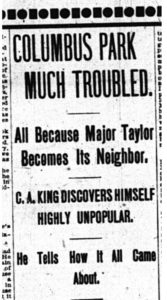
 Major Taylor lived in the Hobson Avenue house for 25 years, first with his sister Gertrude, who died of tuberculosis at age 19 in April 1900, and later with his wife and daughter. The property was sold in 1925 to pay off the Taylors’ debts, including hospital bills from a bad case of shingles that debilitated Major Taylor during his retirement from bicycle racing. Then the Taylors moved into a rented apartment in a three-decker at 14 Blossom St.